
Inside the Studio · Round Table Recording Company Blog
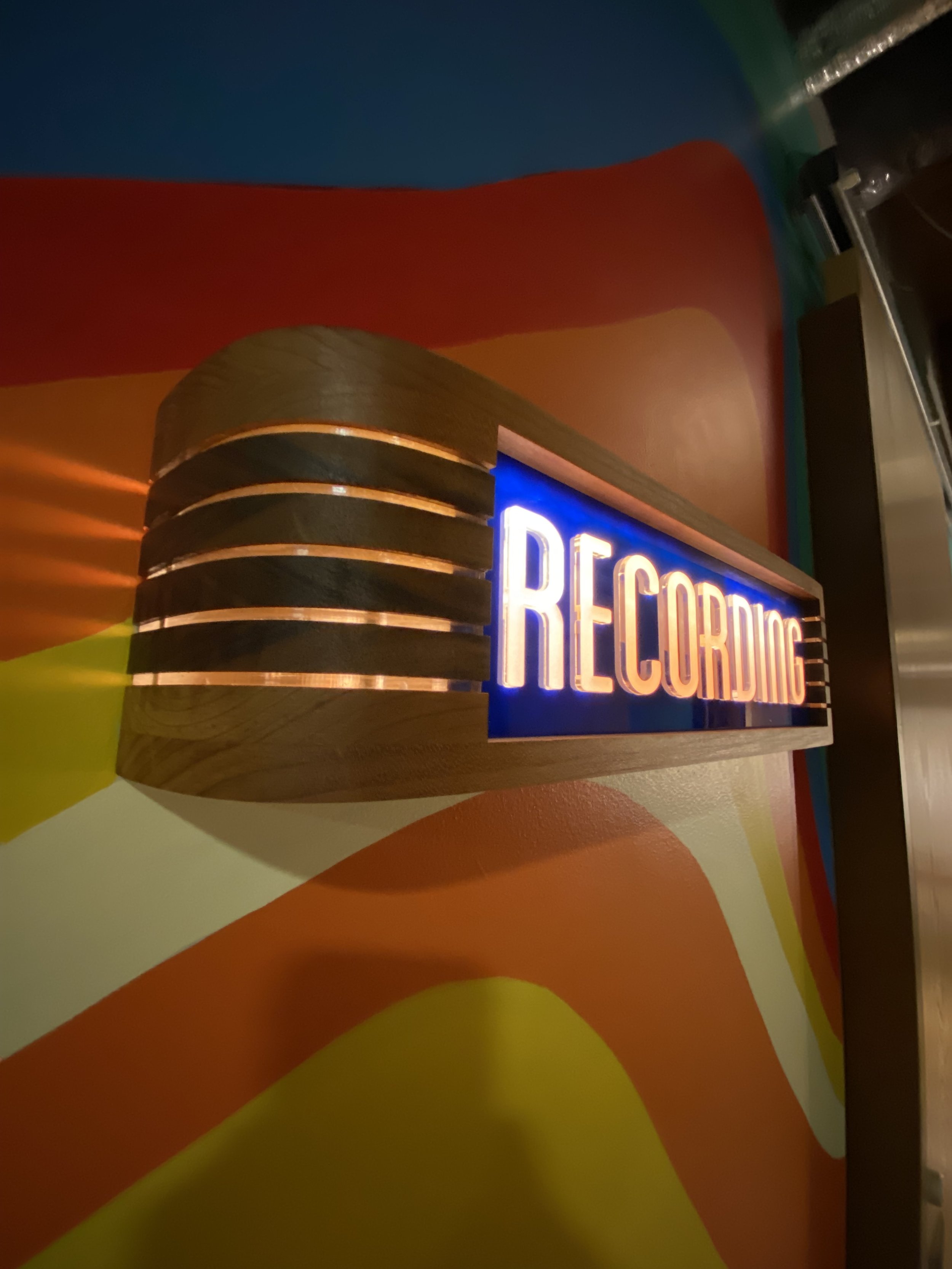
Players who can perform in front of a room of five hundred people freeze when a small red light comes on. It happens often enough to have a name.
Red light fever, also called red light fright, is what happens when awareness of being recorded changes the performance. It gets studied in academic music technology and discussed openly in the trades, which is more than most studios will mention before your session.
What Is Red Light Fever?
It's the gap between how you play when nobody's capturing it and how you play when something is.
Writing in Premier Guitar in September 2025, John Bohlinger calls it the red light paradox: the act of capturing inspiration often chokes it.
Researchers take it seriously too. Associate Professor Samantha Bennett at the Australian National University built a project around performance in the recording studio, naming red light fever as one of the tensions worth investigating, where a musician's performance is affected by the awareness of being recorded.
So if this has happened to you, you aren't fragile. You're having the documented response.
Why Does Being Recorded Change How You Play?
Three things change at once, and none of them have anything to do with your playing.
Permanence is the first. Bohlinger's point is that every take can live forever, so the red light starts to feel like a judge whose verdict is final. A live show forgives a sloppy bar because it's gone a second later. A recording keeps it.
Scrutiny is the second. Someone is listening closely through monitors built to reveal everything you'd rather they missed, and in most studios you can watch them watching you through glass.
The clock is the third. Studio time costs money, and knowing that turns every retake into an invoice running in the back of your head.
How Does It Show Up in a Session?
Usually as caution, not as collapse.
Bohlinger describes the pattern precisely. Players retreat to safe choices and keep the take they know works instead of the one they actually wanted to try. They ask for extra passes for insurance even when they weren't unhappy with the last one. And they'll spend hours second-guessing a good take because it isn't perfect, which he says kills the vibe for everyone in the building.
Freezing outright happens too. Bohlinger quotes Thom Bresh saying his mind goes blank whenever someone puts him on the spot, and Bresh was not a timid player.
None of that looks like panic from the outside. It looks like diligence. That's exactly why sessions lose hours to it without anyone naming what's going on.
What Can You Do About It?
Change what the moment means, and give yourself less to think about while you're in it.
Treat it like a gig. Dim the lights, picture a crowd, or track live off the floor with the band playing together.
Woodshed the part. Preparation is the cheapest insurance there is, because a part that's genuinely in your hands can't be shaken loose by a light.
Play like you're messing around. Bohlinger credits session guitarist Tom Bukovac with this one, and the take where you weren't trying is frequently the take that gets kept.
Treat the red light as a vibe check, not a verdict.
Forgive the imperfection. You can know the moment is permanent and still let it be flawed, and the alternative is twelve takes that are all technically fine and none of them alive.
The through line is that every one of these lowers the stakes of the specific moment you're in. That's the whole mechanism.
What Should Your Engineer Be Doing?
Most of the work, honestly. Comfort in the room is their job, not yours.
Bobby Owsinski is direct about this in his January 2025 piece on getting a singer's best performance. The engineer controls most of what makes a room feel safe, and the useful fixes are free.
Dim the room. Turn the control room lights off so nobody is being studied through the glass. Keep the talkback open, because silence from the control room between takes does real damage to the mood.
The headphone mix is a tool, not a utility. Owsinski points out that balance alone shapes delivery: lower the vocal in a singer's headphones for a louder, more aggressive performance, or raise it for something softer and closer. A little reverb or delay usually helps someone commit.
An engineer who does none of this isn't being neutral. They're leaving your performance to chance.
Why Doesn't a Beautiful Room Fix This on Its Own?
Because feeling watched cancels out what the room gives you.
There's a finding in the lighting research that makes this concrete. Anna Steidle and Lioba Werth tested creative performance under different light levels in the Journal of Environmental Psychology and found that dim light measurably improved creative problem solving.
Then came the qualifier. Participants who felt self-conscious got no benefit from the dim light. The lighting did nothing at all for people who felt observed.
Apply that to a studio and the conclusion is uncomfortable for the industry. You can build the best-sounding room in the city, and if the people working in it make an artist feel watched, the room is wasted.
How We Handle It at Round Table Recording Company
We bring it up before it happens, because naming the thing takes most of the power out of it.
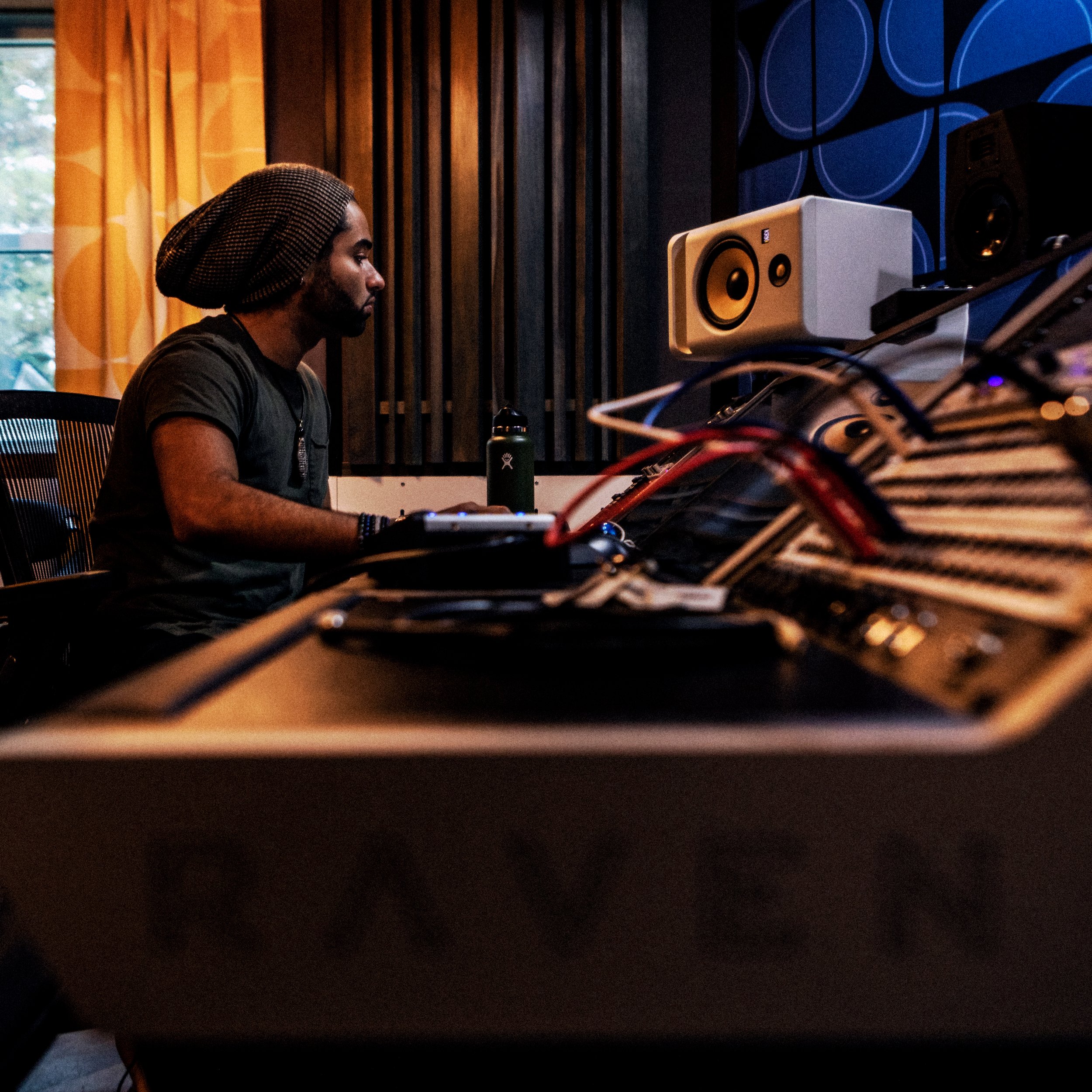
Studio B's control room has dimmable lights and a window with a curtain, so the space can go dark and private when that's what a take needs. We kill the control room lights when an artist would rather not be studied through the glass, we keep the talkback open, and we build the headphone mix around how you want to hear yourself before we worry about how we want to hear you.
We also say the quiet part out loud: the first take is not an audition. If you want to run a part three times just to get the room off your shoulders, run it three times. That isn't wasted money. That's how good takes happen.
If the studio has ever felt like a place where your playing gets smaller, come have the conversation before you book. Tour the rooms, meet whoever would be running your session, and decide whether it feels like somewhere you could forget the light is on. Contact us today to schedule a tour of the studio!
Related Links
Frequently Asked Questions
What is red light fever?
It's the industry name for the way a performance changes once a musician knows it's being recorded. Writing in Premier Guitar, John Bohlinger calls it the red light paradox, since the act of capturing inspiration often chokes it. Researchers studying performance in the studio use the same term.
Is it normal to get nervous in a recording studio?
Yes, and it affects experienced players too. The causes are structural rather than personal: takes are permanent, someone is listening closely through revealing monitors, and the clock is running. None of that is a comment on your ability.
How do I stop freezing when the recording starts?
Lower the stakes of the moment. Prepare the part until it's genuinely in your hands, treat the session like a gig rather than an exam, and try playing as though you're just messing around. The relaxed pass is often the one everyone keeps.
Should I ask the engineer to change the lighting?
Absolutely, and a good engineer will offer first. Dimming the room and turning off the control room lights are standard tools for helping a performer stop feeling watched, and neither one costs anything.
Does tracking live with the band help?
Often, yes. Playing together off the floor restores some of what makes live performance comfortable, including the energy of other people and the sense that the moment is shared rather than examined. It isn't right for every project, so ask what your studio can accommodate.
What if I can't get a good take after several tries?
Stop and change something rather than running the same pass again. Take a break, adjust the headphone mix, move to a different part of the song, or come back to it another day. Repeating a take you're already tense about rarely improves it.
Sources: John Bohlinger, “Red Light Fright,” Premier Guitar (September 2025); Bobby Owsinski, “In The Studio: Getting A Singer's Best Vocal Performance,” ProSoundWeb (January 2025); Anna Steidle and Lioba Werth, “Freedom from Constraints: Darkness and Dim Illumination Promote Creativity,” Journal of Environmental Psychology (2013); Samantha Bennett, Performance in the Studio project, Australian National University School of Music.
Round Table Recording Company · Indianapolis, Indiana · www.thertrc.com