
Inside the Studio · Round Table Recording Company Blog
Most businesses already know video and audio work. What stops them is the lift. Somebody has to plan it, set up the room, fix the lighting, get the sound right, run the camera, edit it, and deliver files in the right formats. That somebody usually has a full-time job doing something else.
So the content does not get made, or it gets made on a laptop webcam in a conference room with the HVAC humming, and it quietly undermines the message it was meant to deliver. Here is where audio and video content earns its place across a business, and why the production side deserves as much attention as the script.
Why Does Video and Audio Build More Trust Than Text?
Because people trust people. A written memo tells you what a company decided. A two-minute video from the person who made the decision tells you why, and lets you judge their tone, their conviction, and whether they believe it themselves.
That is not a soft argument. Research on internal communication shows video produces far higher information retention than text and completion rates well above what email achieves. For customers, Wyzowl's 2026 survey found 82 percent of video marketers report positive ROI. The format works because it carries the thing text strips out: a human being.
How Does Video Improve Internal Communications?
Leadership updates, policy changes, quarterly results, and culture messages all land differently when employees can see and hear the person delivering them. An email announcing a reorganization invites speculation. A short video from leadership explaining the reasoning invites understanding.
It also scales in a way meetings cannot. A well-produced update reaches every shift, every location, and every remote employee with the same message and the same tone, and it can be watched again when someone needs to.
Why Use Video for Employee Training?
Because it is how people prefer to learn, and how they retain what they learn. Surveys consistently show a large majority of employees prefer video over text for instructional content, and LinkedIn's Workplace Learning Report found 94 percent of employees would stay longer at a company that invests in their development.
Format matters as much as medium. The Association for Talent Development points to three to six minutes as the sweet spot, with engagement falling off after that. A thirty-minute topic works better as five short modules than one long recording, and that structure is decided in planning, well before anyone presses record.
Can Video Answer Customer Questions Better Than a Help Page?
Often, yes. A written FAQ answers the question. A short video FAQ answers the question and shows the customer who they are dealing with. Wyzowl's research found 62 percent of video marketers say video has helped reduce support queries, which is a cost savings and a service improvement at the same time.
The strongest customer-facing video is simple: one question, one clear answer, one real person from your team. Nobody needs a production that looks like a commercial. They need one that looks and sounds like you care about getting it right.
How Should Businesses Use Short and Long Website Content?
Both have a job. Short-form clips under a minute are how people discover you, and Vidyard has reported that roughly two-thirds of viewers watch business videos all the way through when they run under sixty seconds. Long-form content, interviews, explainers, and full conversations are how interested prospects decide to trust you.
The efficient approach is to capture both from the same session. One well-planned recording produces a full-length piece for your website, a set of short clips for social and landing pages, and audio for a podcast feed. Product and landing pages with video have been shown to convert meaningfully better than text-only pages, so that content earns its keep.
Does Video Actually Work for Prospecting?
The data says it does. Terminus documented a 216 percent higher response rate on sales prospecting emails that included personalized video. A forty-five-second message that says the prospect's name and references their specific situation is not an interruption. It is proof that someone paid attention.
Prospecting video does not require a studio every time. A rep can record a quick personal message at their desk. What a studio does provide is the foundation those messages point back to: a company introduction, a founder's message, and customer stories that look and sound like the business is established and serious.
What Is Knowledge Transfer, and Why Record It?
Knowledge transfer is capturing what your most experienced people know so the rest of the organization can learn it. The veteran who knows why the process works the way it does. The founder who remembers every early client decision. The technician who can diagnose a problem by sound.
When those people retire, change roles, or leave, their knowledge goes with them unless someone captured it. A recorded conversation, structured like an interview and led by someone who knows how to draw good answers out, preserves that expertise in the expert's own voice. It becomes onboarding material, training content, and institutional memory all at once.
Why Does Production Quality Matter So Much?
Because the audience judges the company by the content before they hear a word of it. Muddy audio, echoing rooms, harsh lighting, and awkward edits all signal the same thing: this was not a priority. Clean sound, flattering light, and tight editing signal the opposite.
Audio carries more weight than most people expect. Viewers will forgive modest video far more readily than bad sound, and poor audio is the fastest way to lose someone before your point arrives. That is where a recording studio has a real advantage over a general video vendor. Sound is the craft, not an add-on.
What Does a Trusted Production Partner Actually Do?
They take the lift off your team. A good partner helps plan the content so it serves a purpose, handles the room, lighting, cameras, and audio, coaches the people on camera so they come across as themselves, edits the material into finished pieces, and delivers files ready for every platform you use.
That last piece about coaching matters more than it sounds. Most people are not comfortable on camera, and a nervous executive reading a script sounds like a nervous executive reading a script. Getting a genuine, relaxed answer out of someone is a skill, and it is one we practice every day with artists in our studios. A CEO who has never been on camera and a vocalist in the booth for the first time have more in common than either would guess.
How Round Table Recording Company Helps
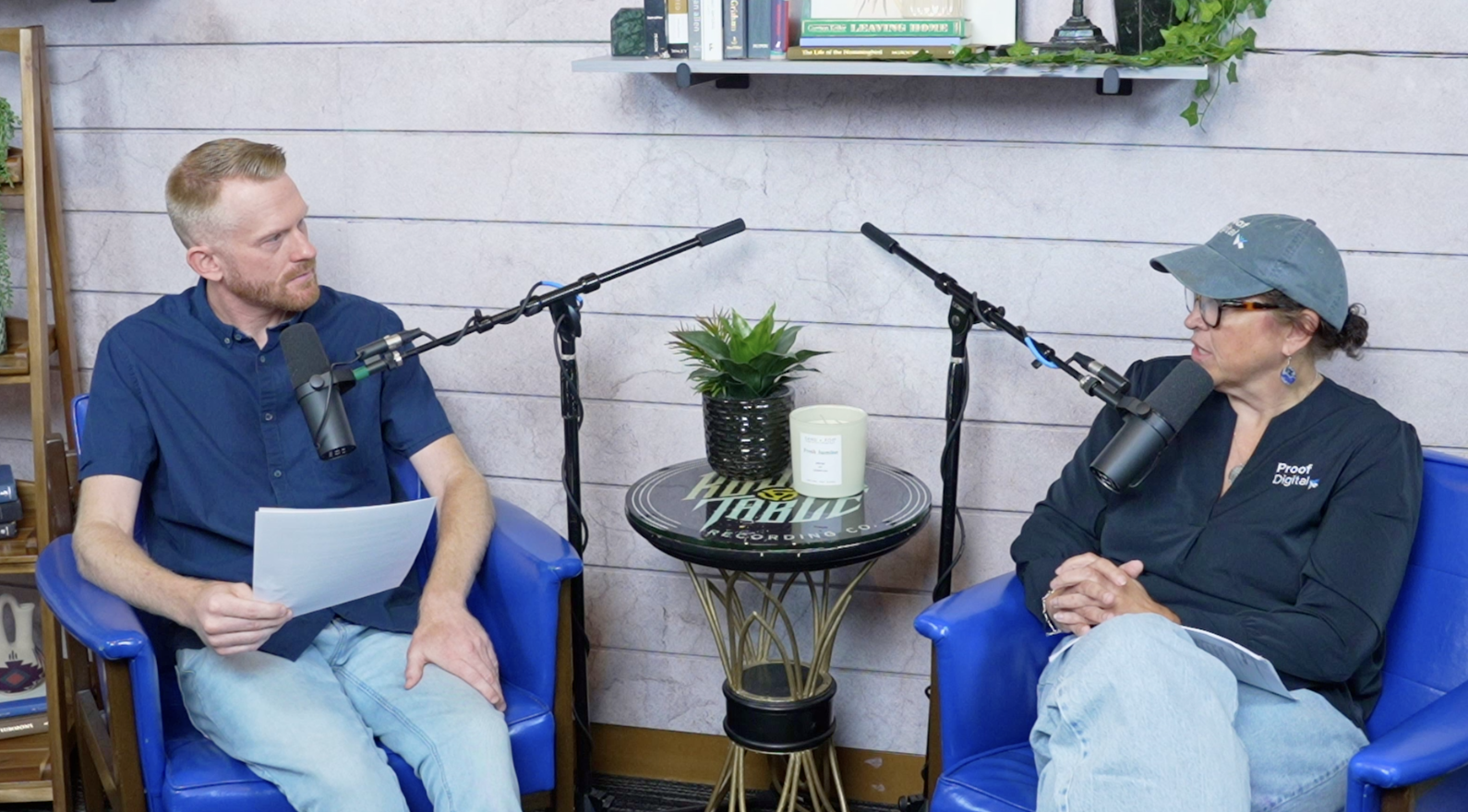
Our podcast and video communications studio was built for exactly this work. It is acoustically treated for broadcast-quality audio, equipped with professional lighting and multi-camera capture, and the set can be customized to fit each client's look and feel. We handle planning, recording, editing, and delivery, so your team can focus on what they want to say rather than how to get it produced.
We also genuinely enjoy this work. Every business that comes through the door brings expertise we have not heard before, and helping those people sound and look as good as their knowledge deserves is one of the best parts of what we do.
Ready to put your people on the record? Tell us what you want to communicate and who needs to hear it, and we will help you build a plan. Reach out through our contact us page or podcast inquiry form. Round Table Recording Company, 6345 Carrollton Ave in the Broad Ripple Arts District of Indianapolis.
Related Links
Meet Trisha, our Podcast Producer
Frequently Asked Questions
Do we need a studio for every video we make?
No. Quick personal messages, like a sales rep's prospecting video, can be recorded at a desk. The studio is for the anchor content your audience returns to: leadership messages, training modules, customer stories, and website pieces that represent the company.
How long should training videos be?
Three to six minutes per module is the widely recommended range, since engagement drops after that. Longer topics work better split into a short series with one clear objective each.
What if our people are uncomfortable on camera?
Most people are, and that is normal. Our team coaches on-camera talent through the session, keeps the atmosphere relaxed, and structures conversations so answers come out naturally rather than rehearsed.
Can one session produce multiple pieces of content?
Yes, and it should. A well-planned session can produce long-form video, short clips for social media, audio for a podcast feed, and still images, which spreads the value of a single production day across months of content.
How do we record knowledge transfer from a retiring employee?
Treat it like an interview rather than a lecture. Plan the questions, let a skilled host guide the conversation, and record in several shorter sessions so the material is organized by topic when it is finished.
Is audio or video more important?
Both matter, but audio matters more than most people expect. Viewers will tolerate modest visuals, but poor sound makes them leave quickly, which is why we treat audio as the foundation of every production.
Sources: Swarmify, 10 Proven Benefits of Video-Based Employee Training (March 2026); Devlin Peck, 37 Employee Training Statistics and Trends for 2026 (July 2026); D-MAK Productions, Corporate Training Video Production Guide for 2026 (May 2026); LinkedIn, 2025 Workplace Learning Report; Association for Talent Development (2025); Levitate Media, Video Conversion Statistics 2026 (May 2026); Wyzowl, 2026 Video Marketing Survey via SellersCommerce (July 2026); Vidyard, The Top Video Marketing and Sales Stats That Matter (April 2026); Terminus, personalized video response rate data via Vidyard and SalesLoft.
Round Table Recording Company · Indianapolis, Indiana · www.thertrc.com