
Inside the Studio · Round Table Recording Company Blog
Ask ten engineers for their vocal chain, and you'll get ten answers, all of them correct. That isn't evasion.
A vocal chain is a set of decisions made about one specific voice singing one specific song. Change the voice and the right answer changes with it, which is why the most useful thing we do with a new artist isn't reaching for a microphone. It's asking what they want their voice to sound like.
What Is a Vocal Chain, and Why Isn't There One Right Answer?
A vocal chain is the path a voice takes from the room into the recording: the microphone, the preamp, and whatever compression or equalization shapes it on the way in. There's no universal version because every link gets chosen against a voice rather than against a spec sheet.
Each stage does something specific. The microphone decides what it captures and what it leaves behind. The preamp sets the level and adds its own character, from clean and uncolored to deliberately warm. Compression manages dynamic range so a whispered phrase and a belted one can live in the same take. Equalization corrects or shapes what's left.
Those decisions interact. A bright microphone into a clean preamp sounds nothing like the same microphone into a tube preamp, and neither combination is correct in the abstract. The question is always what this voice needs on this song.
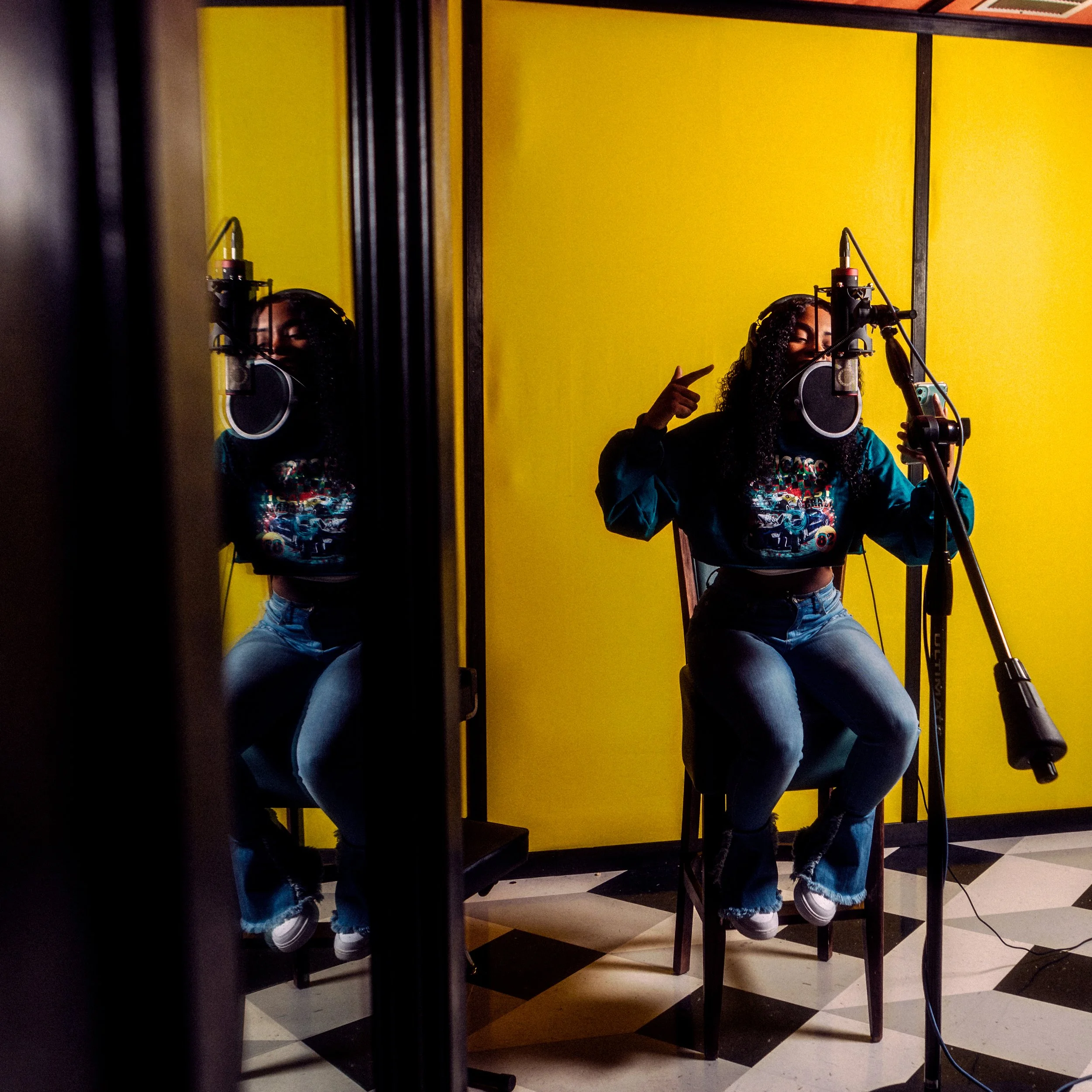
Why the Most Expensive Microphone Usually Isn't the Right One
Because price reflects what went into building a microphone, not how well it suits the person standing in front of it.
Mike Sessler made this case in ProSoundWeb in September 2025, writing that the honest answer to “what's the best vocal mic?” is almost always “it depends.” He describes less expensive microphones outperforming costlier ones for certain voices, and a band whose members all bought the model that worked for their lead singer, only to find it suited none of them.
Bobby Owsinski states the principle plainly in his five principles of vocal recording, published in February 2025: don't assume your most expensive microphone is the best choice, and understand that a poor match is difficult to fix later.
We see this in our rooms regularly. A vocalist arrives expecting us to reach for the priciest thing on the shelf, and the take everyone agrees on comes from a microphone that costs a fraction of it.
How Do You Match a Microphone to a Voice?
Start with the character of the voice and choose a microphone that complements it rather than doubles down on what's already there.
Owsinski's rule of thumb is that a good match usually carries a sonic character opposite the singer's. Bright microphones tend to suit darker voices, and mellower microphones tend to suit shrill or edgy ones. Sessler's examples follow the same pattern. A singer with an edgy, sometimes piercing voice sounded best through a microphone that softened those edges while keeping clarity, while a deep male voice needed one whose presence peak helped his low end come through.
Sessler also offers a practical, no-cost test. Record the voice, then look at what you're doing with equalization. If the channel sits close to flat, the microphone is a good match. If you're making large cuts or boosts to get it where you want it, change the microphone instead of fighting the problem with processing.
Pattern, placement, and distance matter as much as the model on the box. Owsinski argues against automatically defaulting to cardioid, since omnidirectional and figure-8 patterns suit some voices better. He recommends positioning the microphone around nose or eye level and angling it down toward the mouth, which reduces plosives and sibilance without altering the microphone's natural sound.
On distance, roughly an open hand's width works for most singers and about two hand widths for belters. Owsinski is also direct that a pop filter mostly exists to keep moisture off a condenser capsule, and that correct placement is the real solution to plosives.
Should You Track Vocals With Compression?
Most of the time, yes, and we do. The real question isn't whether to compress but how much, and that answer comes from the sound and performance goals rather than from a default setting.
Compression on the way in does two jobs at once. It controls a wide dynamic range so a whispered line and a belted chorus can sit in the same take without one disappearing. It also lets the singer hear something closer to a finished vocal in their headphones, which almost always improves what they give you. A vocal that sounds solid in the headphones gets sung with more confidence than one that sounds thin and exposed.
The catch is that compression printed during tracking can't be taken back out. That's why the amount matters more than the decision itself. A few decibels of gain reduction on the peaks gives you control without boxing in the mix. Heavy compression at the tracking stage locks in a sound you might not want three weeks later, and the mix engineer has no way to undo it.
Some vocals shouldn't be compressed on the way in at all. Highly dynamic performances where the dynamics are the point, quiet and delicate material where compression would pull up the noise floor and the room, and sessions headed to an outside mix engineer who has asked for raw takes are all good reasons to track flat and handle it later.
Our default is to track with compression, applied conservatively and chosen for the voice. We'll say so when we think a particular vocal is better off without it.
Where Do Reference Tracks Fit In?
References turn adjectives into decisions.
“Warm” means one thing to a singer and something else to an engineer. “Intimate” could mean close and breathy, or dry and forward. When a vocalist brings two or three songs whose vocal sound they're chasing, that ambiguity disappears and we can work backward from a result we can both hear.
We aren't trying to copy the record. We're identifying what's actually producing the quality the artist responds to, which often isn't what they assume. Sometimes what they love about a reference vocal is the performance itself, or an arrangement that leaves space around it, not anything in the chain. Finding that out early saves a session.
Where Tone and Performance Come Together
The technical setup is a performance tool, not a separate department.
Owsinski's January 2025 piece on getting a singer's best performance is explicit about this. Comfort is everything for a singer, and the engineer controls most of it. Dim the room. Turn the control room lights off so the singer doesn't feel watched. Leave the talkback open, because silence from the control room between takes does real damage to the mood.
The headphone mix is the most underrated tool in the room. Owsinski points out that balance alone shapes delivery. For a more aggressive, louder performance, lower the vocal in the singer's headphones or bring up the backing tracks. For something softer and more intimate, do the reverse.

Ask how the singer wants to hear themselves
This is the question most sessions skip, and it changes the setup more than almost anything else on the technical side.
Some singers want their voice completely dry in the headphones. Any reverb or effect puts distance between them and their pitch, and they'll sing sharp, flat, or tentative, trying to hear through it. Others can't commit to a take until the vocal sounds close to finished. They need reverb, slap-back delay, or pitch correction in their ears before the performance opens up, and giving it to them makes the difference between a usable take and a self-conscious one.
Worth being clear about: that's a monitoring decision, not a recording decision. We can print your vocal clean and still feed you reverb, delay, or an autotune effect in the headphones, so what you hear supports the performance without committing the recording to anything. If the effect is part of the sound of the record rather than something that helps you perform, that's a different conversation, and we'll talk about printing it.
We ask at the top of a session, and we keep asking as it goes. Plenty of singers want more effect on a ballad and almost none on an aggressive verse.
This is where tone and performance stop being separate problems. The best microphone in the building won't rescue a tentative take, and a singer who feels good in the room gives you something no plug-in manufactures.
How We Approach a Vocalist We Haven't Recorded Before
We start with a conversation, not a microphone locker.
The first questions are about goals. What is this song supposed to do? Where is it headed: a release, a sync pitch, a demo? What do you want your voice to sound like on it, and what have you disliked about how it's been recorded before? That last question tells us more than almost anything else.
Then we listen to you sing. A few minutes of real singing in the room tells us about range, dynamics, sibilance, plosives, and where your voice thins out or opens up. We'll often put up two or three microphones and let you hear the difference yourself, since you're the one who has to live with the result.
We also ask how you like to hear yourself while you sing, and we build the headphone mix around that answer before we worry about ours.
From there we build the chain for that session. Sometimes that means a tube microphone into a colored preamp with gentle compression on the way in. Sometimes it's a dynamic microphone and very little else, because that's what the voice and the song are asking for. We commit to what serves the song, and we leave ourselves room wherever committing would be a gamble.
What we don't do is hand every vocalist the same setup because it worked last week.
If you're booking your first session with us and you aren't sure what your vocal should sound like, bring references and we'll work it out together in the room. If you already know exactly what you want, tell us, and we'll build toward it. Start the conversation by contacting us today.
Related Links
The Power of Reference Tracks: The Most Underused Tool in Music Production
Before You Hit Record: Why Preproduction Is the Most Important Phase
Frequently Asked Questions
What is a vocal chain?
It's the path your voice takes from the room into the recording, typically through the microphone, preamp, and any compression or equalization applied on the way in. We select each piece for the specific voice and song rather than pulling from a standard template.
Do I need an expensive microphone to get a good vocal?
No. Price reflects how a microphone was built, not how well it suits your voice, and engineers regularly find that a less expensive model flatters a particular singer better. The match matters far more than the price tag.
How do I know which microphone suits my voice?
Try a few and listen. A useful shortcut is to notice how much equalization it takes to make the recording sit right, since a microphone that needs large cuts or boosts is usually the wrong match. As a starting point, brighter microphones often complement darker voices and mellower ones often suit edgy voices.
Should I bring reference tracks to a vocal session?
Yes, two or three if you can. References replace vague descriptions with something everyone in the room can hear, and they often reveal that what you love about a vocal sound is the performance or the arrangement rather than the equipment.
Should vocals be compressed while recording or left for the mix?
We track most vocals with compression, because it controls a wide dynamic range and gives the singer a more finished sound in their headphones. The judgment is how much, since compression printed on the way in can't be removed later. Highly dynamic performances, very quiet material, and sessions headed to an outside mix engineer who wants raw takes are the usual reasons to track flat instead.
Can I have reverb or autotune in my headphones while I record?
Yes, and you should ask for whatever helps you perform. Effects on your headphone mix are separate from what gets recorded, so we can print a clean vocal while you hear reverb, delay, or a pitch effect. Some singers need a dry vocal to stay in tune, and others can't commit to a take without hearing it closer to finished.
Sources: Mike Sessler, “One Mic Fits All? Working Toward An Optimum Result For Vocals,” ProSoundWeb (September 2025); Bobby Owsinski, “The 5 Principles Of Vocal Recording” (February 2025); Bobby Owsinski, “In The Studio: Getting A Singer's Best Vocal Performance,” ProSoundWeb (January 2025).
Round Table Recording Company · Indianapolis, Indiana · www.thertrc.com