
Inside Studio C: The Room for Focused, One-on-One Work
Inside the Studio · Round Table Recording Company Blog

We’ve covered Studio A, where bands play together, and Studio B, where songs get built. Studio C is the room we go to when the work calls for focus.
It’s our most intimate studio, and it has a feel all its own. Warm walnut wood, soft neutral fabrics, and lighting you can set however you like make it an easy place to settle in and work for hours.
What Is Studio C Built For?
Studio C has three main jobs, and we designed the room around all three:
One-on-one production. A comfortable control room for a producer or engineer and a client to create together.
Single-instrument and vocal recording. A live room made for one voice or one instrument at a time.
Focused editing. A well-treated, quiet space where an engineer can put their head down and get the detail work done.
Here’s how each one works.
Why Is Studio C Great for One-on-One Production?
Studio C has all the same production software and access to the same MIDI instruments as Studio B. The difference is the room. Studio B fits two artists and two producers, while we set up Studio C for one-on-one collaboration: a producer and a client, side by side in the control room, building a song together. Learn more about our music production.
That smaller setting changes the energy. There’s no audience in the room and no pressure to perform for a crowd. It’s just you, your producer, and the song. For many artists, that’s exactly where the best ideas come out.
Studio C also has its own live room right off the control room. That means you can build the beat, write the hook, and cut the vocal in the same session without changing rooms. When an idea hits, we can capture it while it’s fresh.
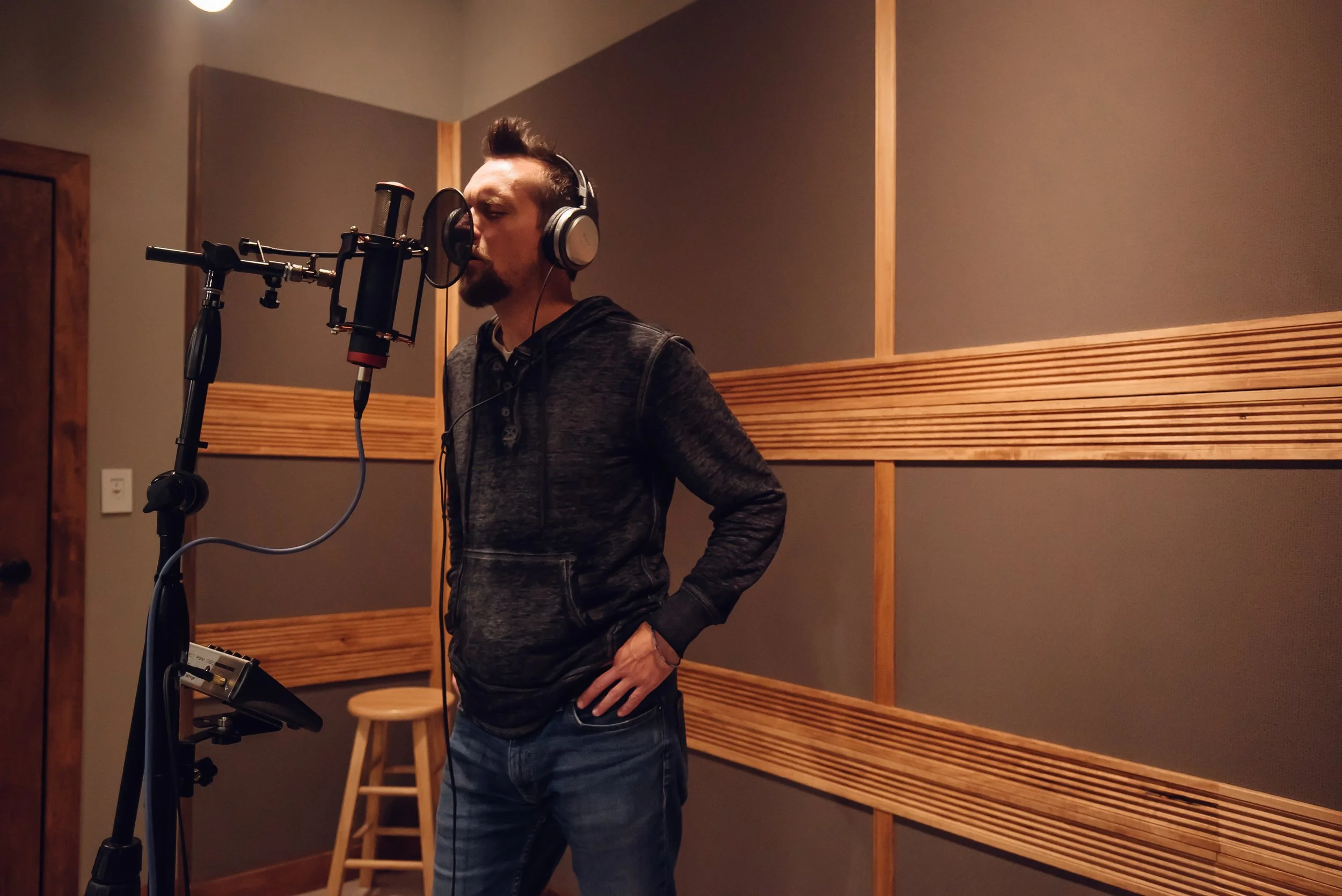
What Can You Record in Studio C’s Live Room?
Studio C’s live room is built for one voice or one instrument at a time. You won’t record a full drum kit in here, but percussion, acoustic guitar, single-instrument overdubs, and vocals all sound great in this room.
Recording one part at a time has real advantages. The engineer’s full attention stays on a single performance, each part is captured clean and on its own, and you can take the time to get it right without holding up a band.
The live room has a clear sight line to the control room, so the engineer and performer can see each other throughout the take. That makes it a natural fit for:
Lead and background vocals
Voice-over
Audio-only podcasts
Acoustic guitar
Percussion and other single-instrument parts
If your song needs a full drum kit or a band playing together, we’ll book that part in Studio A. If your podcast includes video, our dedicated podcast and video studio is set up for that.
What Microphone Do You Use for Vocals in Studio C?
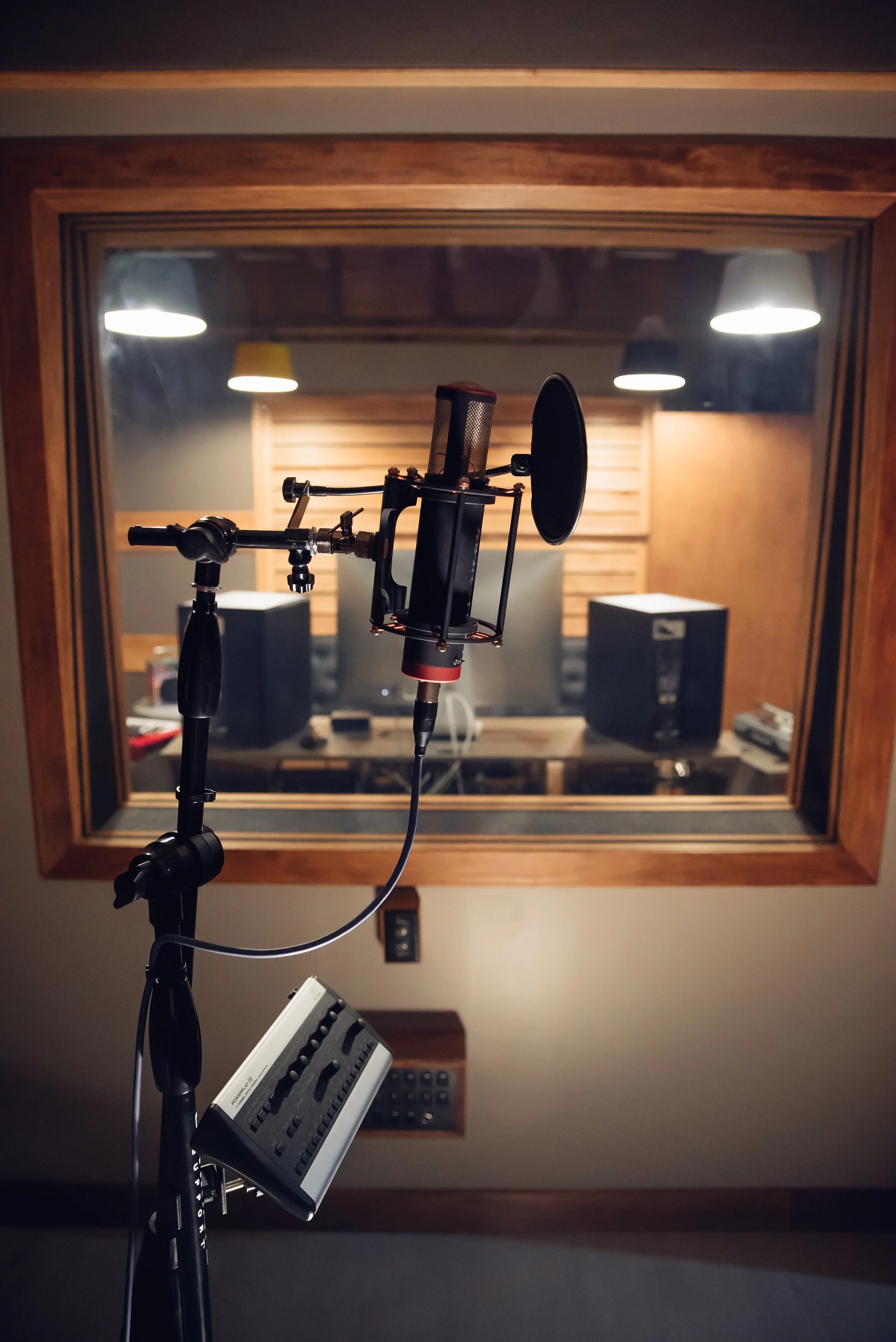
Studio C features a Pearlman TM2 microphone, and it’s a favorite on vocals. That said, we don’t believe in one microphone for every singer. We have other microphone choices available, and we pick the one that works best with your voice.
From there, your vocal chain runs through our Daking preamps, a Distressor for compression, and a UA Volt 876 interface. We use compression conservatively and set it for your voice, so the performance stays natural.
If you’re new to the studio, we start by talking about your goals for the song. Then we build the right setup for your voice, not a one-size-fits-all chain.
Why Do Engineers Use Studio C for Editing?
Not every part of making a record is exciting. Vocal tuning, drum editing, cleaning up audiobook takes, lining up parts, and many other tasks take patience and careful listening. Studio C gives an engineer a well-treated, focused space to put their head down and get that work done right.
The Barefoot studio monitors are a big part of that. They give the engineer a clear, detailed picture of what’s happening in the recording, so they can catch and fix small problems before they reach the mix.
That focused editing time matters. When we handle the detail work carefully, the mixgoes smoother and the final record sounds better.
What Is the Vibe Like in Studio C?
Studio C has a warm, relaxed feel. We finished the room in mid-century modern American walnut wood and paired it with neutral-tone fabrics, so it feels more like a comfortable living space than a lab.
The lighting gives you options too. Bright for a focused editing session, low and warm for a late-night vocal, or anywhere in between. Set the room to match your mood, and settle in.
Come See Studio C for Yourself
Got a song to build one-on-one, a vocal to record, or a project that needs careful editing? Studio C is ready for it. Come take a tour and hear the room for yourself. Contact us today and and we’ll help you plan a session that fits. We can’t wait to work with you!
Related Links
Frequently Asked Questions
What is Studio C used for?
Studio C has three main uses: one-on-one music production, recording single instruments and vocals, and focused editing work like vocal tuning, drum editing, and audiobook editing. It’s Round Table Recording Company’s most intimate studio.
What is the difference between Studio B and Studio C?
Both studios have the same production software and MIDI instruments. Studio B comfortably fits two artists and two producers, while Studio C is set up for one-on-one work between a producer and a client.
Can I record drums in Studio C?
Studio C’s live room isn’t built for a full drum kit, but percussion and other single-instrument parts sound great there. For a full kit, we record in Studio A.
What microphone is in Studio C?
Studio C features a Pearlman TM2 microphone. We also have other microphone choices, and we pick the one that works best with each singer’s voice.
Can I record voice-over or a podcast in Studio C?
Yes. Studio C’s live room is a great fit for voice-over and audio-only podcasts. For podcasts with video, we use our dedicated podcast and video studio.
How much does Studio C cost?
Studio C is $70 per hour with an engineer included, or $65 per hour for sessions of five hours or more.
Round Table Recording Company · Indianapolis, Indiana · www.thertrc.com